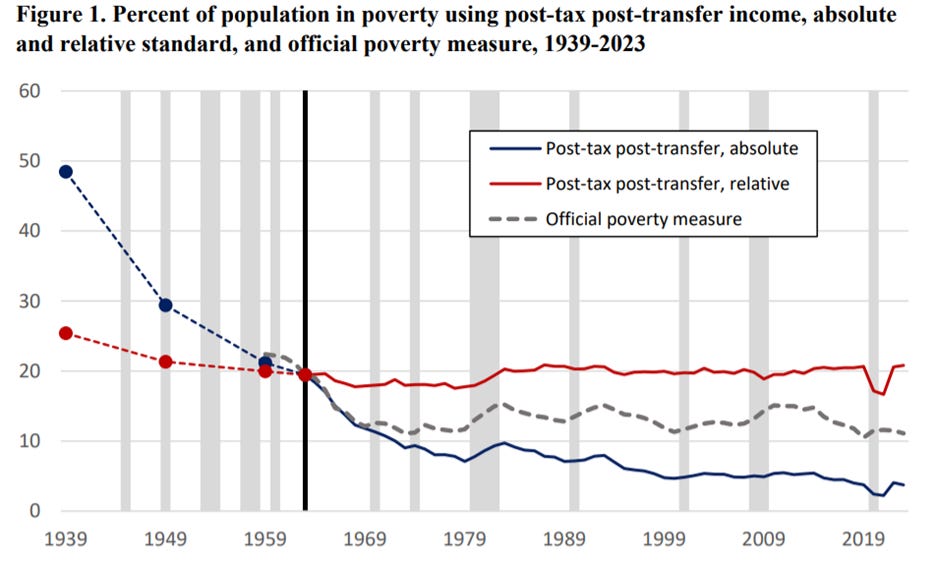
As the Debt Dispatch has previously covered, “the lesson from Minnesota’s fraud scandal is that no amount of red tape can fix a system built on misaligned incentives.” For example, as NLRB Edge founder Matt Bruenig highlights , “the Minnesota day care schemes all occurred in programs where a private provider acts as a middleman between the government and individuals.” Under this model, the government provides funds to private entities that must use them to provide services; any unspent funds are kept as profit. “This outsourcing approach to welfare policy is inherently vulnerable to fraud” because “the best way to increase [profit] margins is to spend as little as possible on providing services” by “[degrading] the quality of services provided” or to “simply spend nothing on services by not providing them.” Economist Arnold Kling points out that, “if people were spending their own money, including money given to them by the government, they would not spend it on nonexistent day cares.” The paper finds, as Mercatus scholar Jack Salmon points out , that “the greatest era of poverty reduction came before the War on Poverty.” As Figure 1 shows, while poverty continued to decline after the War on Poverty began in 1964, the pace was no faster than before: 29 percentage points from 1939 to 1963 (48.5 percent to 19.5 percent), versus only 15.7 percentage points from 1963 to 2023 (19.5 percent to 3.7 percent).
Author: February 23, 2026
Published at: 2026-02-23 00:00:00
Still want to read the full version? Full article