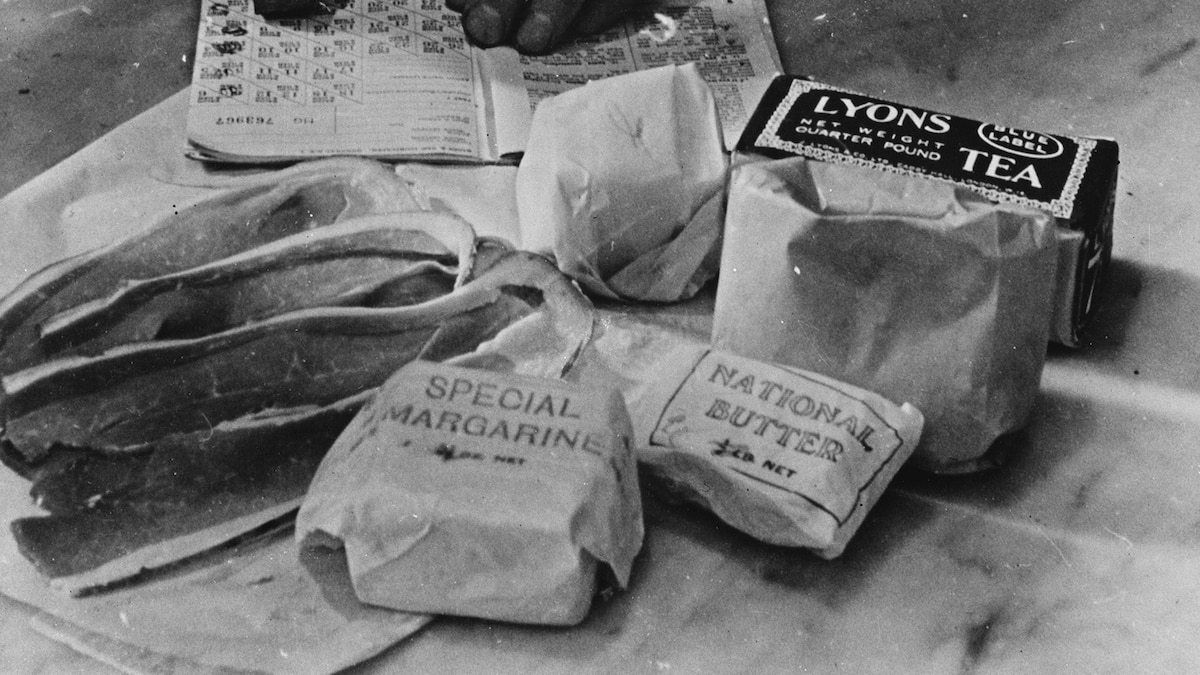
Drummond found that by the 1830s, Britain’s new urban working class were seriously ill-fed but the consequences of this were not understood: “There was a fear,” he wrote, “that many of the governing classes then felt lest the half-starved workpeople should ever bring about an organized movement to demand higher wages and better conditions.” For the next century, as wages improved, so did the diet of the working class, but Drummond had uncovered a paradox: The diet of the poor was needlessly inadequate in essential foods while the diet of the wealthy suffered from an abundance of harmful gluttony, including too many fatty meats and game birds and puddings galore, both savory and sweet. Drummond made the most of the space available in the ships bringing food across the Atlantic, a critical lifeline amid the losses inflicted on the convoys by German submarine wolf-packs. At the worst point of the war, half a million tons of shipping went to the bottom of the Atlantic a month.
Author: @NatGeo
Published at: 2025-12-23 00:00:00
Still want to read the full version? Full article