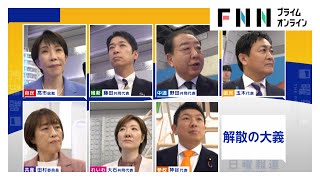
Asked whether they would implement a reduction in the consumption tax on food within fiscal 2026 if they took power, Tamaki’s party declined to raise its hand, arguing it opposed cutting the tax only on food, while the other six parties said they would deliver the measure and laid out their reasoning, with the discussion quickly turning to the practical and fiscal hurdles of designing a food-only tax cut. Oishi attacked the move as a “selfish dissolution,” saying it risked undermining budget deliberations and could even make voting harder during winter conditions, while Fujita defended the dissolution, saying the governing framework had changed and that asking voters to judge a major policy shift was the clearest possible justification, adding that his party still intended to pursue its long-standing proposal to reduce the number of lawmakers after the election. The election is set to become a compressed campaign, with the official start on January 27 and voting and ballot counting scheduled for February 8, and the show’s on-air audience poll suggested the public remains split on whether the key issues have become clear, underscoring how the coming days may determine whether tax relief, the dissolution itself, or security policy emerges as the decisive theme.
Published at: 2026-01-25 20:24:25
Still want to read the full version? Full article