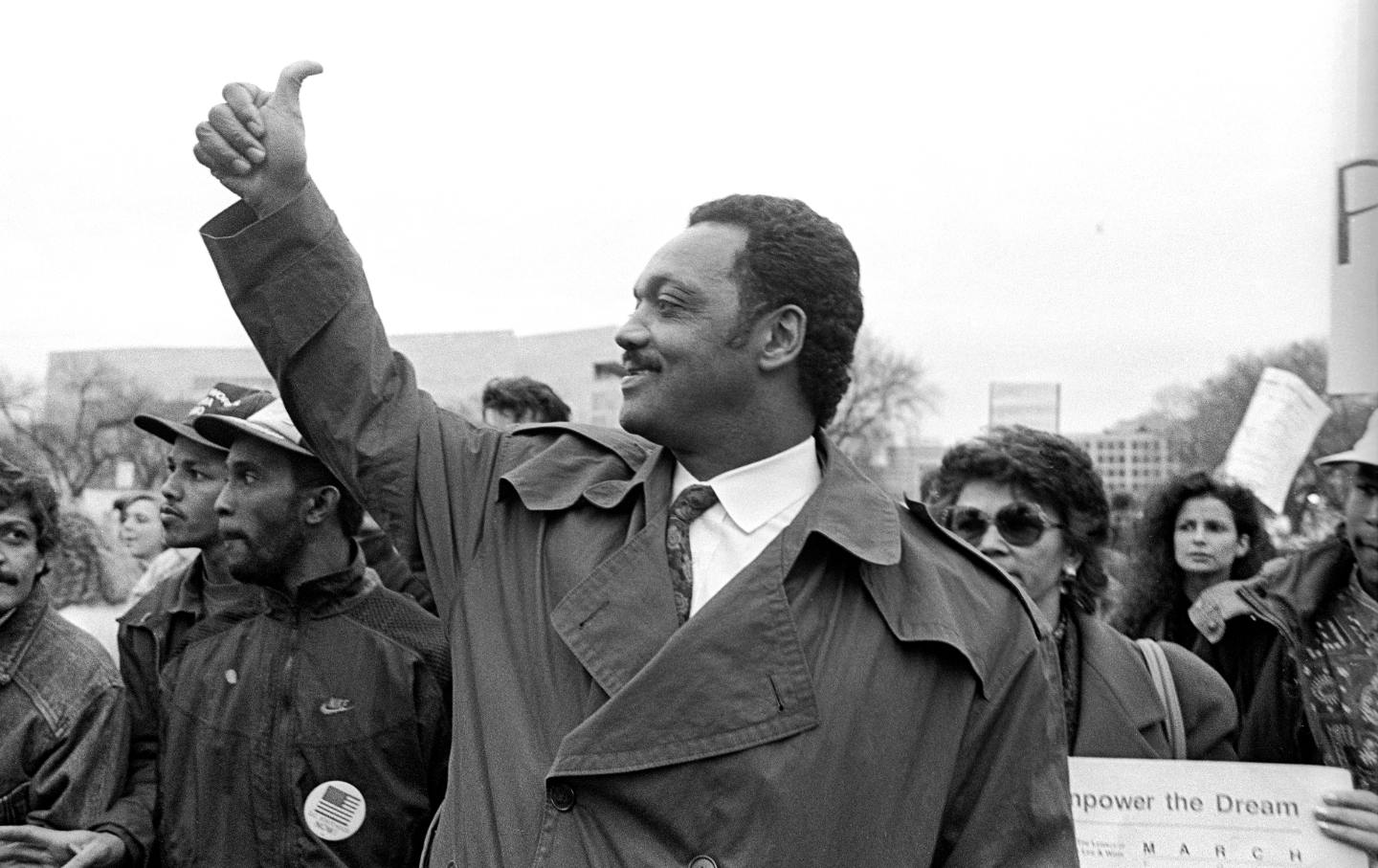
Over seven decades in the public arena, Jackson emerged as one of the most multifaceted figures in American history: a legendary civil rights leader, a knowing and caring defender of the disenfranchised, a vital advocate for voting rights and voter mobilization, a savvy media critic who recognized the importance of challenging narratives that promoted discrimination and division, an essential ally of labor unions, a reformer of the Democratic Party, a friend to struggling family farmers and urban workers alike, and a counselor to presidents and prime ministers. It is important to recall how—as Ronald Reagan was ramping up the Cold War around the world and pouring US resources into heated conflicts in El Salvador and on the border of Nicaragua—Jackson boldly broke not just with the Republican president but also with many Democrats to make opposition to war a focal point of his bid. After it was revealed that the Central Intelligence Agency had mined three harbors in Central America, as part of an effort to destabilize the country’s left-wing government, Jackson declared in April 1984 that “the undeclared war against the people of Nicaragua…must be stopped.” In addition to criticizing the Reagan administration and the CIA, Jackson took issue with Walter Mondale and Gary Hart, the front-runners for the Democratic nomination that year, for failing to clearly deliver a message that the US must “stop our funding of terror in Nicaragua and El Salvador now and to withdraw all our troops from Central America.”
Author: John Nichols
Published at: 2026-02-17 00:00:00
Still want to read the full version? Full article