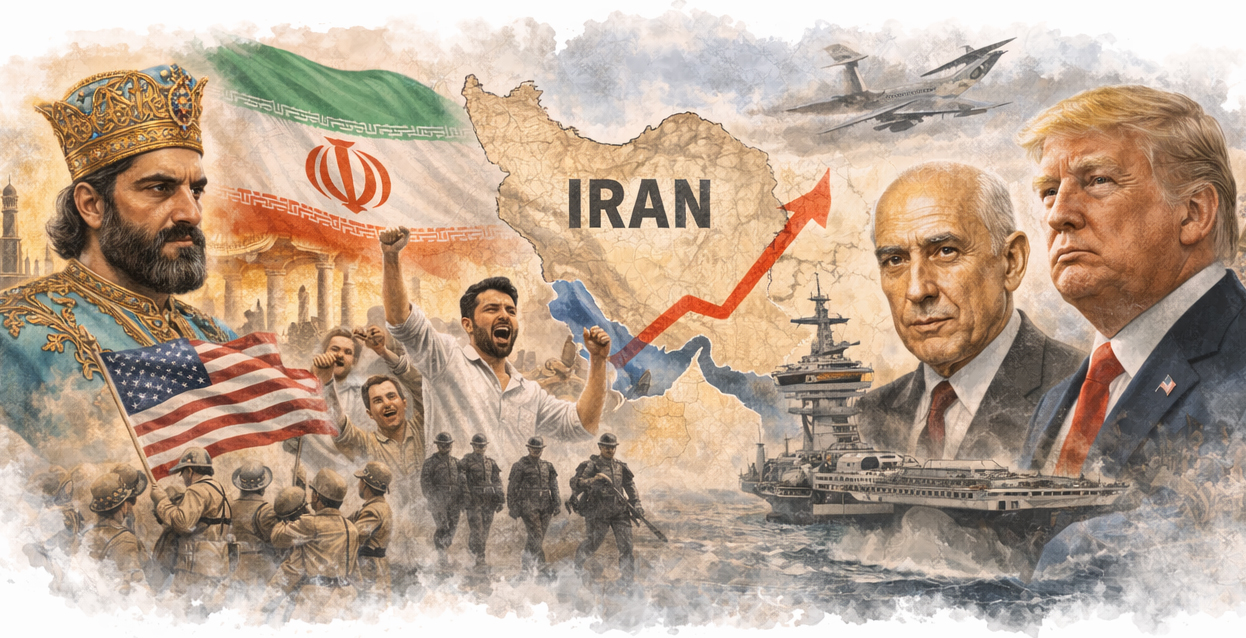
In the first chapter of his 1874 novel The Gilded Age, Mark Twain offered a telling observation about the connection between past and present: “History never repeats itself, but the… present often seems to be constructed out of the broken fragments of antique legends.”Among the “antique legends” most helpful in understanding the likely outcome of the current U.S. intervention in Iran is the Suez Crisis of 1956, which I describe in my new book Cold War on Five Continents. Iran’s drone strikes have blocked more than 90% of tanker departures from the Persian Gulf and shut down the massive Qatari refineries that produce 20% of the world supply of Liquified Natural Gas, sending natural gas prices soaring by 50% in much of the world and by 91% in Asia — with the price of gasoline in the U.S. heading for $4 a gallon and the cost of oil likely to reach a staggering $150 per barrel in the near future. But now, as Washington focuses more of its foreign policy on the Western Hemisphere, U.S. influence is fading fast along the vast arc of Eurasia stretching from Poland, through the Middle East to Korea that scholars of geopolitics like Sir Halford Mackinder and Nicholas Spykman once dubbed the “rimland” or “the zone of conflict.” As Spykman put it succinctly once upon a time: “Who controls the Rimland rules Eurasia; who rules Eurasia controls the destinies of the world.”
Author: Alfred W. McCoy
Published at: 2026-03-16 23:35:27
Still want to read the full version? Full article