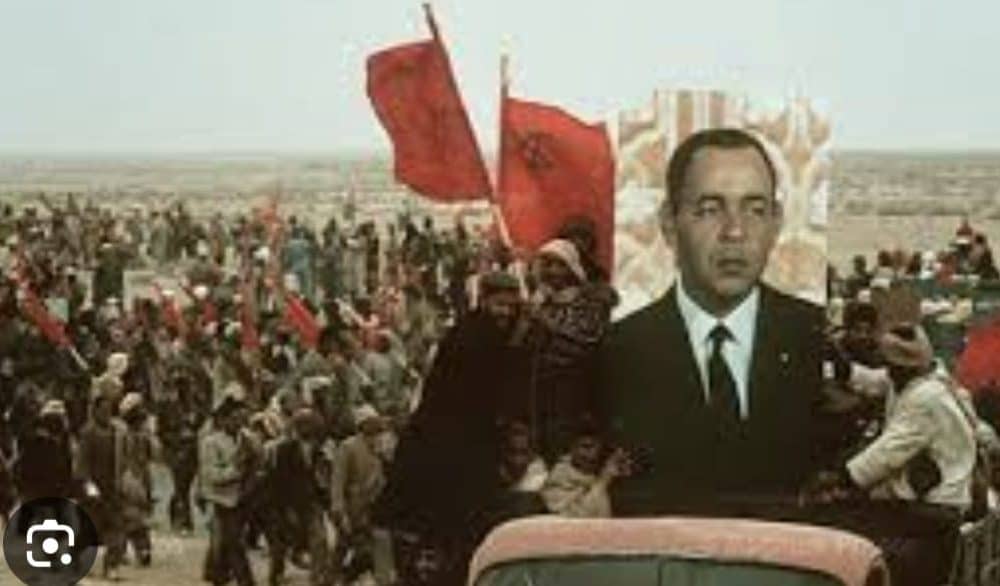
This article will trace the background of the dispute up to a seminal moment: the “Green March” of November 1975, an extraordinary coup-de-main by Morocco’s monarchy that split the region with Mauritania and led to a conflict with Algeria and the Sahraoui Polisario Front that has yet to entirely ebb fifty years later. Yet though its sultans, including the Alaoui dynasty that has ruled since the mid-1600s, frequently claimed a caliphal title as Emirul-Mouminin, they were not unchallenged among the Muslims of the West: to their east, the Ottoman sultanate arrived as far as Algeria through links with seafaring corsairs, and to the south they competed with such West African sultanates as the Songhai. The Moroccan elite of the time was coopted rather than crushed, symbolism around the monarchy was enhanced even as its power was stripped away, and this ensured a breathing space: unlike Algeria, where Arabic language and Islamic leadership had been systematically crushed, Morocco experienced a “soft colonization” that nonetheless deeply impacted the way its elites saw the world.
Author: Abderrahim Boutaouil
Published at: 2026-01-24 21:03:01
Still want to read the full version? Full article