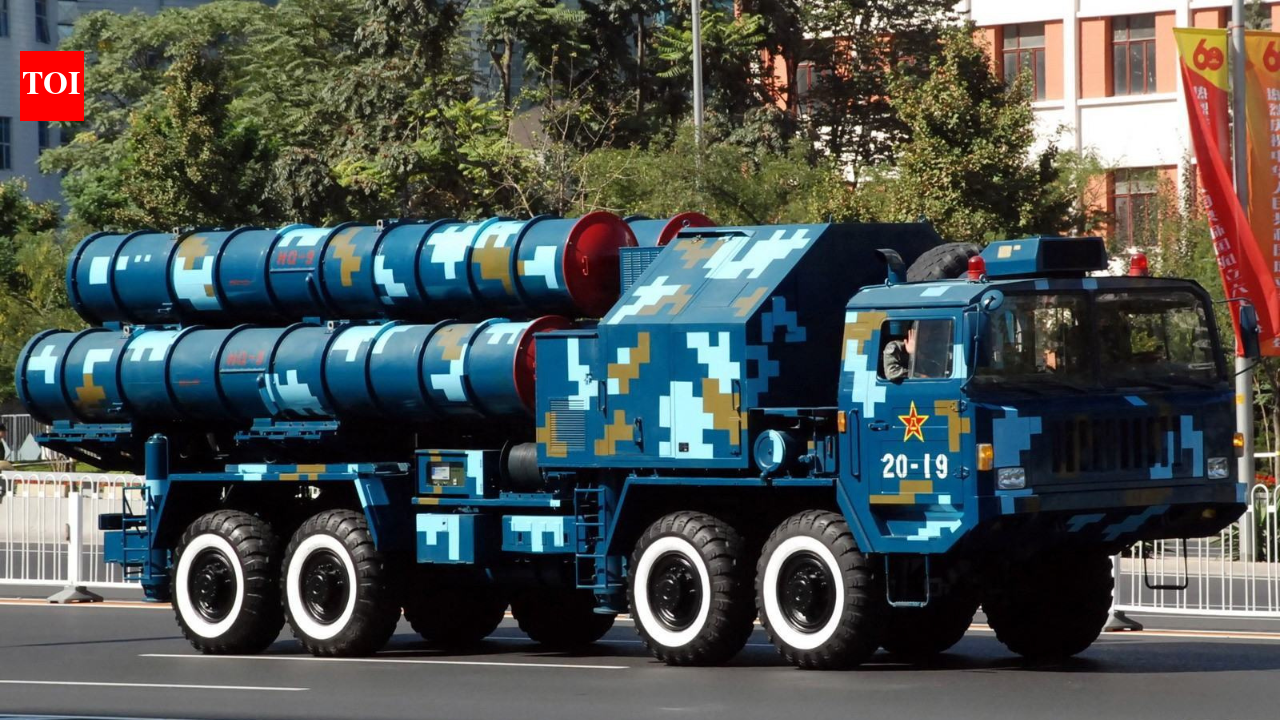
NEW DELHI: The collapse of Iran’s key military infrastructure following coordinated US-Israel airstrikes since Saturday has raised a question mark over the performance of Tehran’s air defence network, constituted of a mix of old Russian S300 missile system, Chinese-origin HQ-9B surface-to-air missile system and some domestic systems like Bavar-373.While the Russian S-300 is a Cold War-era system that is still widely used by several countries, the HQ-9B air defence system was recently procured by Iran from China to boost its missile defence arsenal. However, this will be the second time that the Chinese HQ-9B systems have appeared to have failed to foil aerial attacks of the US and Israel after last year’s Operation Sindoor when Pakistan was unable to thwart India’s air strikes using the same Chinese defence systems.HQ-9B, inspired by Russian S-300PMU and American Patriot PAC-2 systems, is a fully indigenous air defence system developed by China. It is known to be operational in sensitive regions, including Beijing, Tibet, Xinjiang and the South China Sea.Based on multiple reports, Chinese HQ-9B and Russian-supplied air defence systems failed to effectively counter US-Israel aerial attacks through the most advanced and stealth fighter jets, including F35 Lightning II jets, due to a combination of sophisticated suppression techniques, lack of system integration and advanced electronic warfare.The US-Israel stealth fighter jets and swarm drones reportedly targeted air defence radars and command networks (nervous system of air defence), rendering the Russian and Chinese missile defence systems blind.
Author: Surendra Singh
Published at: 2026-03-01 23:06:29
Still want to read the full version? Full article