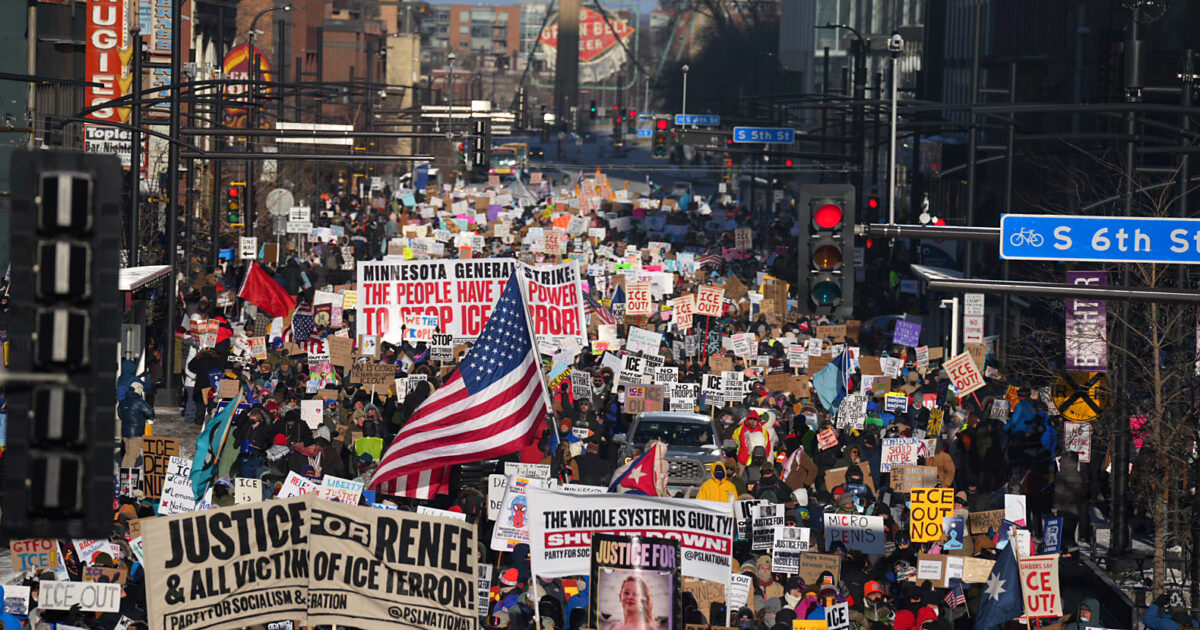
That spring, unions representing 15,000 workers from different sectors held joint rallies, pickets and marches and aligned their strike votes under a campaign that asked, “What Could We Win Together?” That very recent history helped lay the groundwork for the city’s highly organized resistance this winter, but Minneapolis organizers are also drawing on more than a century-long tradition of labor and social justice organizing in the city, including a 1934 general strike that began with a spark before quickly erupting into a conflagration. “Even further back, the Twin Cities have a really rich history of radical and working-class organizing that stretches to the beginning of the 20th century.” Even in the United States, “where there’s the active forgetting and erasure of history,” according to Silver, many organizers in Minneapolis know the legacy of these struggles. At the time, Minneapolis was a financial center and processing center for the grain of the Dakotas and the forest products of the Northwoods and the Minnesota Iron Range.
Author: Tori Gantz
Published at: 2026-01-28 22:00:00
Still want to read the full version? Full article