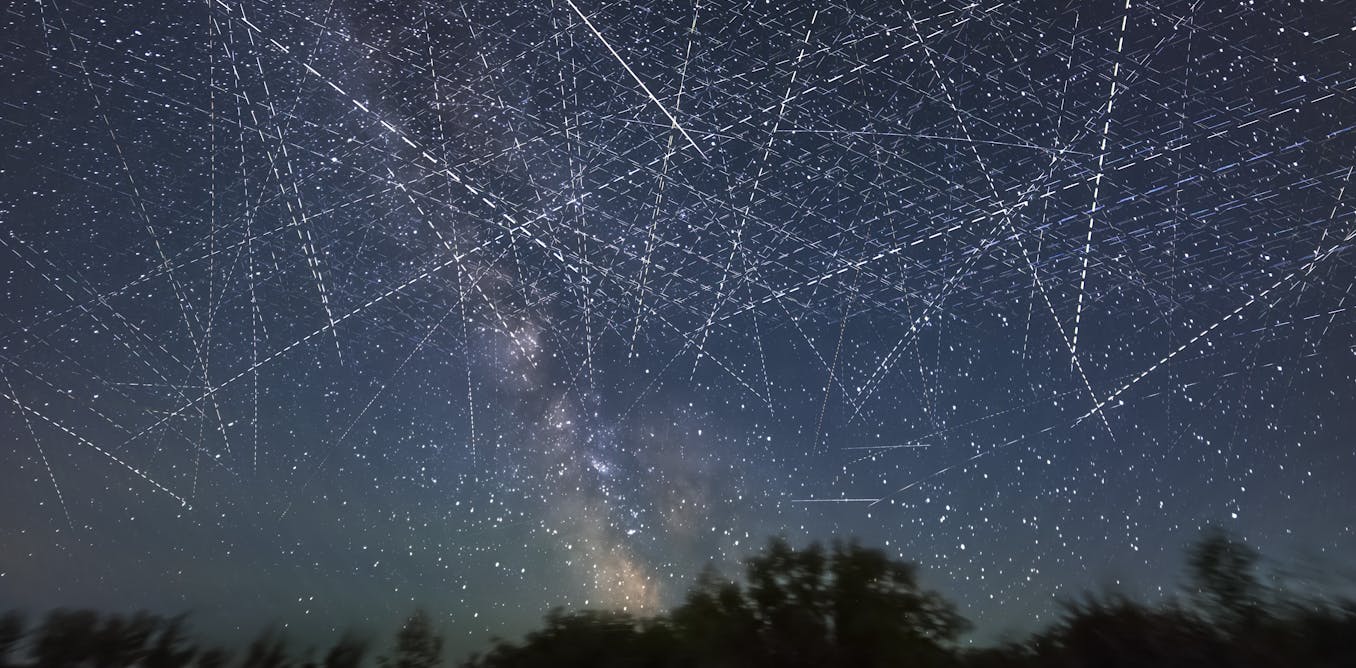
Following similar assumptions to a previous study, we estimate that a million satellites could mean that a teragram (one billion kgs) of alumina accumulates in the upper atmosphere – enough, alongside launch emissions, to significantly alter atmospheric chemistry and heating in dramatic ways we do not yet understand. Not all re-entering satellites burn up; debris is already hitting the ground and the chance of a casualty from megaconstellation re-entries is now about 40% per five-year cycle – rising for both people and aircraft as more satellites are added to orbit. All of this means the FCC’s ruling on the SpaceX proposal, now open to public submissions, could affect everyone – whether through changes to the atmosphere, growing collision risks in orbit or the loss of an unspoilt night sky.
Author: Laura Revell, Professor of Atmospheric Chemistry, University of Canterbury, Michele Bannister, Associate Professor in Planetary Astronomy, University of Canterbury, Samantha Lawler, Associate Professor, Astronomy, University of Regina
Published at: 2026-02-25 22:55:59
Still want to read the full version? Full article